Rep. Morgan’s Cannabis Reforms Expand Medical Cannabis Access to 37 Additional Illinois Dispensaries
New law expands patient access, preserves medical cannabis tax treatment and removes longstanding barriers to care
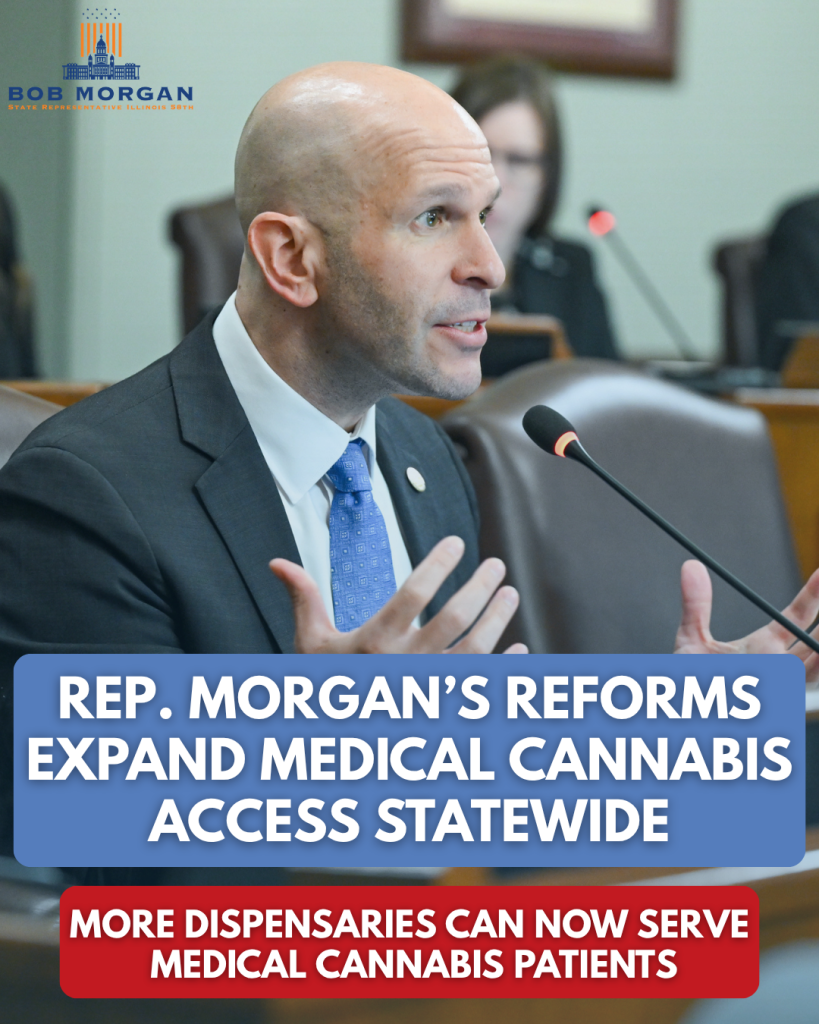
Deerfield, IL – After years of work to modernize Illinois’ medical cannabis program, State Representative Bob Morgan announced Thursday that 37 existing adult-use dispensaries have been approved to serve registered medical cannabis patients, dramatically expanding access for patients across Illinois.
The expansion is a key component of the comprehensive cannabis reform package signed into law in June 2026. The law allows adult-use dispensaries to obtain a medical cannabis license and serve registered patients at the medical cannabis tax rate. This is the first expansion of medical cannabis dispensary locations since the establishment of the program in 2014.
“For years, medical cannabis patients have watched new dispensaries open in their communities while being told they could not access their medicine there simply because those locations were licensed only for recreational use,” said State Representative Bob Morgan (D-Deerfield). “We have worked for years to change that. Today, 37 more dispensaries can serve medical patients, giving Illinois residents shorter trips, more choices, and better access to the care they rely on. We also know additional dispensaries will be opting into the medical cannabis program, so further expansion is on the way.”
Previously, Illinois’ medical cannabis market remained limited to the initial 55 dispensaries licensed through the state’s original medical program, even as the adult-use marketplace expanded across the state. The new law creates a pathway for all dispensaries, including those licensed through Illinois’ social equity program, to serve registered medical patients while preserving the benefits available through the medical cannabis program.
In addition to expanding the number of dispensaries available to medical patients, the law:
- Expands medical access: Eligible recreational dispensaries can obtain licenses to serve registered medical cannabis patients at the medical tax rate.
- Allows telehealth certification: Health care providers may certify qualifying patients through telehealth, removing an unnecessary in-person barrier for patients with medical conditions.
- Modernizes dispensary access: Dispensaries may provide curbside pickup and drive-through service for medical and recreational customers, with priority for medical patients.
- Expands qualifying conditions: Adds additional medical conditions, including endometriosis and ovarian cysts.
- Updates cannabis regulations: Modernizes possession limits and streamlines licensing, employee badging, and other regulatory requirements.
- Supports social equity businesses: Qualifying businesses receive additional flexibility, financial relief, and more time to become operational.
Rep. Morgan has worked on Illinois’ medical cannabis program for more than a decade, beginning in 2013 as the first Statewide Project Coordinator under then-Governor Pat Quinn, where he helped implement the state’s original Medical Cannabis Pilot Program. Since joining the General Assembly, he has continued to advance legislation to expand patient access, authorize telehealth certification, and modernize Illinois’ cannabis laws as the marketplace has evolved. Those efforts helped shape the reforms enacted this year.
“For me, this has always come back to the patients,” Rep. Morgan said. “We built Illinois’ medical cannabis program to help people struggling with debilitating medical conditions, and our responsibility is to make sure it keeps pace with the needs of the patients it was created to serve. This law makes the system more accessible, more practical, and more responsive. After years of advocating for these changes, I’m proud to see them translate into real access for patients in communities across Illinois.”
XXX